
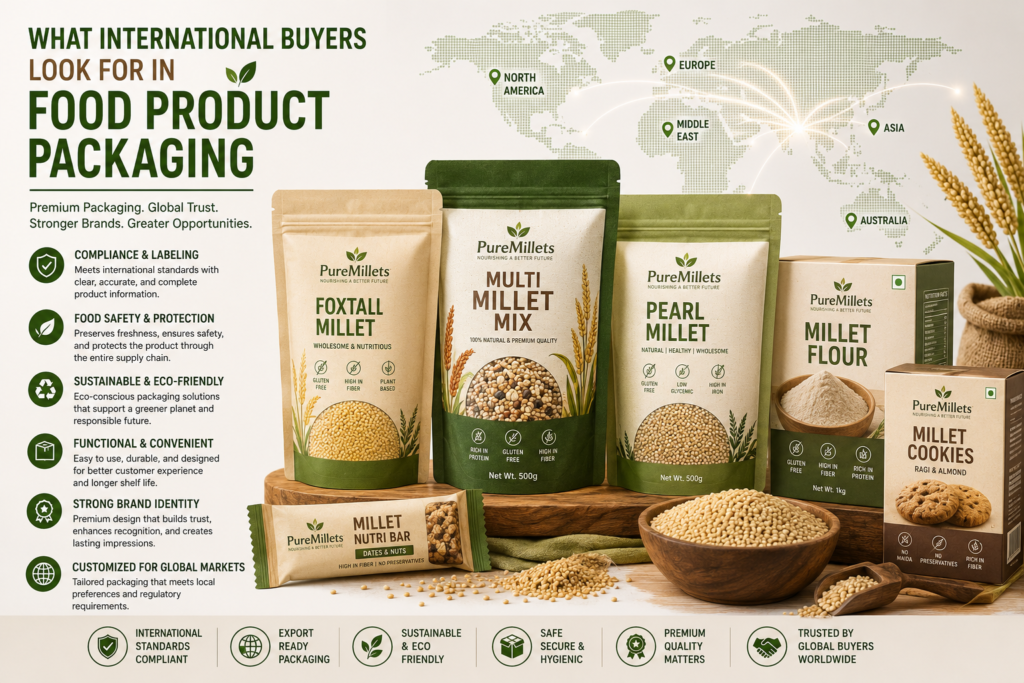
In today’s competitive global food market, product packaging is more than just a protective covering—it is a powerful marketing tool that influences purchasing decisions. International buyers evaluate packaging carefully because it reflects product quality, brand reliability, and compliance with global standards. Businesses that invest in premium packaging often gain a competitive advantage and build long-term relationships with overseas buyers.
First Impressions Matter
Packaging is the first thing buyers and consumers notice. A clean, professional, and visually appealing design creates confidence in the product before it is even opened. Attractive packaging communicates quality, authenticity, and attention to detail, helping products stand out in crowded retail shelves.
Compliance with International Standards
Global buyers expect packaging to meet the regulatory requirements of their respective markets. Proper labeling and compliance reduce the risk of shipment delays or product rejection.
Essential packaging information typically includes:
- Product name
- Ingredient list
- Nutritional information
- Net weight
- Manufacturing and expiry dates
- Batch or lot number
- Country of origin
- Storage instructions
- Barcode
- Export certifications where applicable
Accurate and transparent labeling builds trust with buyers and consumers alike.
Food Safety and Product Protection
One of the primary functions of packaging is to preserve freshness and protect food products during transportation and storage. International buyers prefer packaging that offers:
- Moisture resistance
- Air-tight sealing
- Tamper-evident protection
- Leak-proof construction
- Extended shelf life
- Protection against contamination
High-quality packaging helps reduce product damage and ensures customers receive food in excellent condition.
Sustainable and Eco-Friendly Materials
Sustainability has become a key purchasing factor worldwide. Many retailers and distributors actively seek environmentally responsible packaging solutions.
Popular sustainable packaging options include:
- Recyclable materials
- Biodegradable packaging
- Compostable alternatives
- Reduced plastic usage
- Paper-based packaging
- Reusable containers
Eco-friendly packaging not only benefits the environment but also strengthens a brand’s reputation among environmentally conscious consumers.
Functional and Convenient Design
Modern buyers value packaging that is easy to use and enhances the customer experience. Features such as resealable pouches, easy-open seals, portion-controlled packs, and lightweight designs improve convenience while maintaining product freshness.
Packaging should also be durable enough to withstand international shipping without compromising product quality.
Strong Brand Identity
Packaging serves as a brand ambassador. International buyers prefer products with consistent branding that reflects professionalism and quality. Effective packaging includes:
- A recognizable logo
- Consistent color scheme
- Premium typography
- High-quality product images
- Clear brand messaging
- Professional overall presentation
A strong visual identity increases consumer recognition and builds long-term brand loyalty.
Customization for Global Markets
Different countries have different consumer preferences and labeling regulations. Exporters who customize packaging for regional markets gain a competitive edge. This may include multilingual labels, locally preferred packaging sizes, or culturally appropriate designs that resonate with target audiences.
Why Packaging Influences Buying Decisions
For international buyers, packaging represents far more than appearance. It demonstrates a supplier’s commitment to quality, food safety, regulatory compliance, and customer satisfaction. Well-designed packaging reduces logistical risks while increasing consumer confidence, making it easier for distributors and retailers to promote the product.
Conclusion
Exceptional food packaging plays a vital role in international trade. Buyers look for packaging that combines safety, compliance, sustainability, functionality, and premium branding. Companies that invest in innovative and export-ready packaging are more likely to secure global partnerships, strengthen their market presence, and achieve long-term success in the international food industry.