
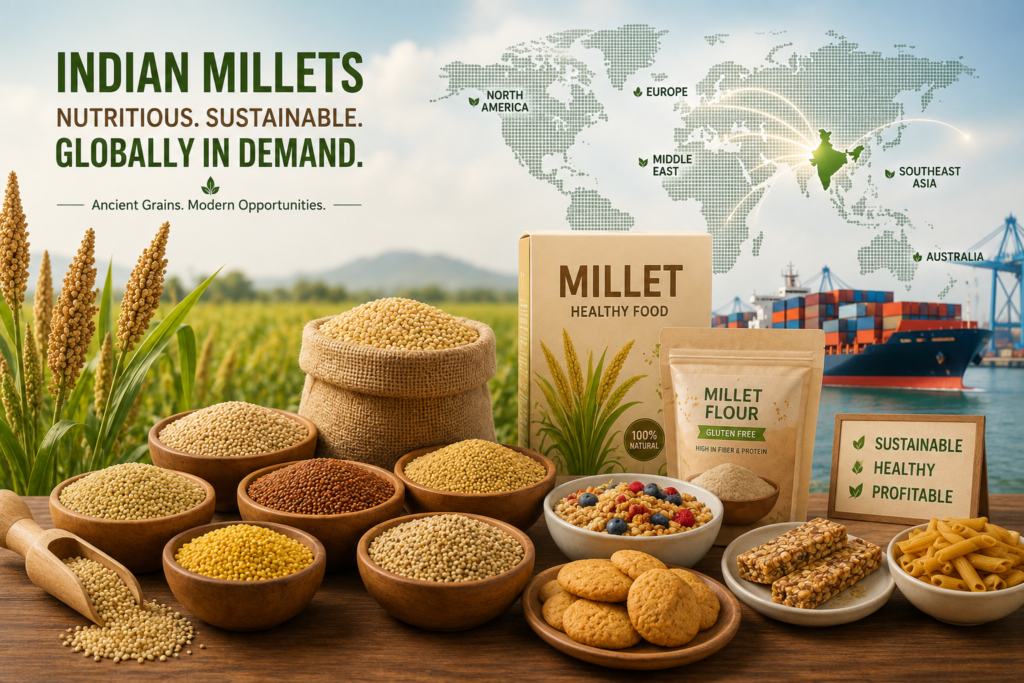
India’s ancient grains are making a remarkable comeback on the global stage. Once considered traditional staples, millets are now being recognized worldwide as nutrient-rich, climate-resilient, and sustainable grains. As global consumers increasingly seek healthier and environmentally friendly food options, Indian millets are creating significant export opportunities for farmers, food processors, and agribusinesses.
The Growing Global Demand for Millets
Health-conscious consumers are moving away from highly processed grains and embracing natural, whole-food alternatives. Millets are rich in dietary fiber, protein, vitamins, minerals, and antioxidants, making them an excellent choice for modern diets. Their gluten-free nature has further increased their popularity among consumers with gluten intolerance and those following healthy lifestyles.
Why Indian Millets Are in High Demand
India is one of the world’s largest producers of millets and offers a wide variety, including pearl millet (bajra), finger millet (ragi), sorghum (jowar), foxtail millet, little millet, barnyard millet, and kodo millet. These grains are valued for their:
- High nutritional content
- Naturally gluten-free composition
- Low glycemic index
- Rich fiber and protein
- Sustainable cultivation methods
- Long shelf life
These qualities make Indian millets highly attractive in international food markets.
Expanding Export Markets
Indian millet exports are growing steadily across major international markets, including North America, Europe, the Middle East, Australia, and Southeast Asia. Rising demand from health food brands, organic retailers, and food manufacturers has opened new business opportunities for Indian exporters.
Consumers worldwide are using millets in breakfast cereals, bakery products, pasta, snacks, energy bars, baby food, and ready-to-cook meal solutions.
Government Support Driving Growth
Government initiatives promoting millet cultivation, processing, and exports have significantly strengthened India’s position in the global market. Investments in quality standards, farmer training, value addition, and international trade promotion are helping Indian producers meet global food safety requirements and expand their reach.
Value-Added Millet Products
Export opportunities extend beyond raw grains. Food companies are developing innovative millet-based products such as:
- Ready-to-eat snacks
- Breakfast cereals
- Millet flour
- Instant meal mixes
- Cookies and biscuits
- Pasta and noodles
- Nutrition bars
- Health beverages
These value-added products generate higher returns while appealing to modern consumers looking for convenient, healthy food options.
Benefits for Indian Farmers and Businesses
The rising export demand creates multiple advantages for India’s agricultural sector:
- Higher income opportunities for farmers
- Increased demand for millet cultivation
- Growth of food processing industries
- Expansion of export businesses
- Better rural employment opportunities
- Stronger presence in global health food markets
The Future of Indian Millet Exports
As awareness of healthy eating and sustainable agriculture continues to grow, global demand for millets is expected to rise further. India’s expertise in millet production, combined with increasing investments in processing and international marketing, positions the country as a leading supplier of premium millet products worldwide.
Conclusion
Indian millets are transforming from traditional grains into globally sought-after superfoods. Their exceptional nutritional value, environmental sustainability, and versatility are creating exciting export opportunities across international markets. By focusing on quality, innovation, and value-added products, India is well-positioned to strengthen its leadership in the global millet industry while improving the livelihoods of farmers and agribusinesses.